
ಫಾರೆಕ್ಸ್ ಮತ್ತು ಕ್ರಿಪ್ಟೋ ಎರಡಕ್ಕೂ ಕೆಲಸ ಮಾಡುವ ಟಾಪ್ 5 ವ್ಯಾಪಾರ ತಂತ್ರಗಳು

ನಾಣ್ಯ ವಿನಿಮಯ (Forex) ಮತ್ತು ಕ್ರಿಪ್ಟೋಕರೆನ್ಸಿ ವ್ಯಾಪಾರದ ಮಾರುಕಟ್ಟೆಯಲ್ಲಿ ಲಾಭವನ್ನು ಹೆಚ್ಚಿಸಲು ಮತ್ತು ಅಪಾಯವನ್ನು ಕಡಿಮೆ ಮಾಡಲು ಸೂಕ್ತವಾದ ವ್ಯೂಹದ ಅಗತ್ಯವಿದೆ. ಪ್ರಾರಂಭಿಕರಾದರೂ ಅಥವಾ ಅನುಭವ ಹೊಂದಿದ ವ್ಯಾಪಾರಿಗಳಾದರೂ, ಉತ್ತಮ ನಿಖರವಾದ ವಿಧಾನವು ತೀರ್ಮಾನಗಳನ್ನು ಸಮರ್ಥವಾಗಿ ತೆಗೆದುಕೊಳ್ಳಲು ಸಹಾಯ ಮಾಡುತ್ತದೆ. ಈ ಲೇಖನದಲ್ಲಿ, Forex ಮತ್ತು ಕ್ರಿಪ್ಟೋ ವ್ಯಾಪಾರ ಎರಡರಿಗೂ ಉಪಯುಕ್ತವಾಗುವ ಐದು ಪರಿಣಾಮಕಾರಿ ವ್ಯಾಪಾರ ತಂತ್ರಗಳನ್ನು ಅನ್ವೇಷಿಸುತ್ತೇವೆ. 1. ಟ್ರೆಂಡ್-ಫಾಲೋಯಿಂಗ್ (Trend-Following) ತಂತ್ರ ಎಲ್ಲाधिक ಜನಪ್ರಿಯ ತಂತ್ರಗಳಲ್ಲಿ ಟ್ರೆಂಡ್-ಫಾಲೋಯಿಂಗ್ ತಂತ್ರ ಪ್ರಮುಖವಾಗಿದೆ. ವ್ಯಾಪಾರಿಗಳು ಮಾರುಕಟ್ಟೆಯ ದಿಶೆಯನ್ನು ಗುರುತಿಸಿ, ಅದರೊಂದಿಗೆ ವ್ಯವಹಾರ ಮಾಡುವ ವಿಧಾನವನ್ನು ಅನುಸರಿಸುತ್ತಾರೆ. ಮೂವಿಂಗ್ ಅವರೆಜಸ್ (Moving Averages), RSI, ಮತ್ತು MACD ಮುಂತಾದ ಸೂಚಕಗಳನ್ನು ಬಳಸುವುದರಿಂದ, ವ್ಯಾಪಾರಿಗಳು ಟ್ರೆಂಡ್ ಅನ್ನು ದೃಢೀಕರಿಸಿ ಅನಗತ್ಯ ಹಾನಿಕರ ವ್ಯವಹಾರಗಳನ್ನು ತಪ್ಪಿಸಬಹುದು. ಈ ತಂತ್ರವು ನಿಯಮಿತ ಮತ್ತು ಶಿಸ್ತುಬದ್ಧ ವ್ಯಾಪಾರದ ಮೆಚ್ಚುಗೆ ಹೊಂದಿದವರಿಗೆ ಸೂಕ್ತವಾಗಿದೆ. 2. ಸ್ಕಾಲ್ಪಿಂಗ್ (Scalping) ತಂತ್ರ ಸ್ಕಾಲ್ಪಿಂಗ್ ತಂತ್ರವು ಹೆಚ್ಚಿನ ತ್ವರಿತ ವ್ಯವಹಾರಗಳಿಂದ ಸಣ್ಣ ಲಾಭ ಗಳಿಸಲು ಅನುಕೂಲಕರವಾಗಿದೆ. Forex ಮತ್ತು ಕ್ರಿಪ್ಟೋ ಮಾರುಕಟ್ಟೆಯಲ್ಲಿ ಬೆಲೆಗಳು ತ್ವರಿತವಾಗಿ ಬದಲಾಗುತ್ತವೆ, ಇದನ್ನು ಸದುಪಯೋಗಪಡಿಸಿಕೊಂಡು ಈ ತಂತ್ರವನ್ನು ಅನುಸರಿಸಲಾಗುತ್ತದೆ. ಸ್ಕಾಲ್ಪಿಂಗ್ ವ್ಯಾಪಾರಿಗಳು ಸಾಮಾನ್ಯವಾಗಿ 1-ನಿಮಿಷದಿಂದ 5-ನಿಮಿಷದ ಚಾರ್ಟ್ಗಳನ್ನು ಬಳಸುತ್ತಾರೆ ಹಾಗೂ ಹೆಚ್ಚಿನ ಲಿಕ್ವಿಡಿಟಿ ಹೊಂದಿರುವ ಆಸ್ತಿಗಳನ್ನು ಆಯ್ಕೆ ಮಾಡುತ್ತಾರೆ. ಈ ತಂತ್ರದಲ್ಲಿ ಜೋಕ್-ನಷ್ಟ (Stop-Loss) ಮತ್ತು ಲಾಭ-ನಿಗದಿ (Take-Profit) ಮಟ್ಟಗಳನ್ನು ಕಟ್ಟುನಿಟ್ಟಾಗಿ ಪಾಲಿಸಲು ಅಗತ್ಯವಿದೆ. 3. ಸ್ವಿಂಗ್ ವ್ಯಾಪಾರದ (Swing Trading) ತಂತ್ರ ಸ್ವಿಂಗ್ ವ್ಯಾಪಾರವು ಮಧ್ಯಮಾವಧಿಯ ತಂತ್ರವಾಗಿದ್ದು, ಕೆಲವು ದಿನಗಳು ಅಥವಾ ವಾರಗಳವರೆಗೆ ಬೆಲೆಯ ಏರುಪೇರಿಗಳಿಂದ ಲಾಭ ಪಡೆಯಲು ಅನುಕೂಲಕರವಾಗಿದೆ. ಸಪೋರ್ಟ್ ಮತ್ತು ರೆಸಿಸ್ಟೆನ್ಸ್ ಮಟ್ಟಗಳು, ಬ್ರೇಕೌಟ್, ಪುಲ್ಬ್ಯಾಕ್ ಮುಂತಾದ ಅಂಶಗಳನ್ನು ಗುರುತಿಸುವುದರ ಮೇಲೆ ಈ ತಂತ್ರ ಅವಲಂಬಿತವಾಗಿದೆ. RSI, ಬೋಲ್ಲಿಂಜರ್ ಬ್ಯಾಂಡ್ಸ್ (Bollinger Bands), ಮತ್ತು ಫಿಬೋನಾಚಿ ರಿಟ್ರೇಸ್ಮೆಂಟ್ ಮುಂತಾದ ತಂತ್ರಜ್ಞಾನ ಸೂಚಕಗಳನ್ನು ಬಳಸಿಕೊಂಡು, ಸರಿಯಾದ ಪ್ರವೇಶ ಮತ್ತು ನಿರ್ಗಮನ ಬಿಂದುಗಳನ್ನು ನಿರ್ಧರಿಸಲಾಗುತ್ತದೆ. ದಿನನಿತ್ಯದ ವ್ಯಾಪಾರದ ಒತ್ತಡವನ್ನು ತಪ್ಪಿಸಲು ಈ ತಂತ್ರ ಉತ್ತಮ ಆಯ್ಕೆಯಾಗಿದೆ. 4. ಬ್ರೇಕೌಟ್ ವ್ಯಾಪಾರದ (Breakout Trading) ತಂತ್ರ ಬ್ರೇಕೌಟ್ ವ್ಯಾಪಾರದ ತಂತ್ರವು ಬೆಲೆ ಮುಖ್ಯವಾದ ಸಪೋರ್ಟ್ ಅಥವಾ ರೆಸಿಸ್ಟೆನ್ಸ್ ಮಟ್ಟಗಳನ್ನು ಉಲ್ಲಂಘಿಸಿದಾಗ ವ್ಯಾಪಾರಕ್ಕೆ ಪ್ರವೇಶಿಸುವುದನ್ನು ಒಳಗೊಂಡಿರುತ್ತದೆ. ಇದು Forex ಮತ್ತು ಕ್ರಿಪ್ಟೋ ಮಾರುಕಟ್ಟೆಯಲ್ಲಿ ಪರಿಣಾಮಕಾರಿಯಾಗಿದೆ, ಏಕೆಂದರೆ ಬ್ರೇಕೌಟ್ಗಳು ಸಾಮಾನ್ಯವಾಗಿ ಬಲವಾದ ಬೆಲೆಯ ಚಲನೆಗಳಿಗೆ ಕಾರಣವಾಗುತ್ತವೆ. ವ್ಯಾಪಾರಿಗಳು ವಾಲ್ಯೂಮ್ ವಿಶ್ಲೇಷಣೆ, ಬೋಲ್ಲಿಂಜರ್ ಬ್ಯಾಂಡ್ಸ್, ಮತ್ತು ಟ್ರೆಂಡ್ಲೈನ್ಗಳು ಮುಂತಾದ ಉಪಕರಣಗಳನ್ನು ಬಳಸಿಕೊಂಡು ಬ್ರೇಕೌಟ್ ಸೂಚನೆಗಳನ್ನು ದೃಢೀಕರಿಸುತ್ತಾರೆ. ಸುಳ್ಳು ಬ್ರೇಕೌಟ್ಗಳಿಂದ ತಪ್ಪಿಸಿಕೊಳ್ಳಲು ಸಹನಶೀಲತೆ ಮತ್ತು ಸೂಕ್ತ ಅಪಾಯ ನಿರ್ವಹಣಾ ತಂತ್ರವನ್ನು ಪಾಲಿಸುವುದು ಅಗತ್ಯ. 5. ರೇಂಜ್ ವ್ಯಾಪಾರದ (Range Trading) ತಂತ್ರ ರೇಂಜ್ ವ್ಯಾಪಾರದ ತಂತ್ರವು ಮಾರುಕಟ್ಟೆ ನಿರ್ದಿಷ್ಟ ಶ್ರೇಣಿಯ ಒಳಗೇ ಚಲಿಸುತ್ತಿರುವಾಗ ಬಳಕೆಯಾಗುತ್ತದೆ. ಈ ತಂತ್ರದಲ್ಲಿ ವ್ಯಾಪಾರಿಗಳು ಸಪೋರ್ಟ್ ಮಟ್ಟದಲ್ಲಿ ಖರೀದಿಸುತ್ತಾರೆ ಮತ್ತು ರೆಸಿಸ್ಟೆನ್ಸ್ ಮಟ್ಟದಲ್ಲಿ ಮಾರುತ್ತಾರೆ, ಇದರಿಂದಾಗಿ ಬೆಲೆ ಪುನರಾವೃತ್ತವಾಗುವ ಮೂಲಕ ಲಾಭ ಪಡೆಯಲು ಸಾಧ್ಯ. ಮಾರುಕಟ್ಟೆ ಉಲ್ಟಾ ಅಥವಾ ಡೌನ್ಟ್ರೆಂಡ್ ನಿದರ್ಶನ ನೀಡದಿದ್ದರೆ, ಈ ತಂತ್ರ ಪರಿಣಾಮಕಾರಿ. RSI ಮತ್ತು ಸ್ಟೋಕ್ಯಾಸ್ಟಿಕ್ ಆಸ್ಕಿಲೇಟರ್ (Stochastic Oscillator) ಮುಂತಾದ ತಾಂತ್ರಿಕ ಸೂಚಕಗಳು ಖರೀದಿ ಮತ್ತು ಮಾರಾಟದ ಅನುಕೂಲಕರ ಶರತ್ಗಳನ್ನು ಗುರುತಿಸಲು ಸಹಾಯ ಮಾಡುತ್ತವೆ. ತೀರ್ಮಾನ ಸರಿ ಸೂಕ್ತವಾದ ವ್ಯಾಪಾರ ತಂತ್ರವನ್ನು ಆಯ್ಕೆ ಮಾಡುವುದು ನಿಮ್ಮ ಅಪಾಯ ಸಾಮರ್ಥ್ಯ, ವ್ಯಾಪಾರದ ಶೈಲಿ ಮತ್ತು ಮಾರುಕಟ್ಟೆಯ ಪರಿಸ್ಥಿತಿಯ ಮೇಲೆ ಅವಲಂಬಿತವಾಗಿದೆ. ನೀವು ಕಡಿಮೆ ಅವಧಿಯ ಸ್ಕಾಲ್ಪಿಂಗ್ ಅಥವಾ ಹೆಚ್ಚು ಅವಧಿಯ ಸ್ವಿಂಗ್ ವ್ಯಾಪಾರವನ್ನು ಪ್ರಾಶಸ್ತ್ಯ ನೀಡಿದರೂ, ಈ ತಂತ್ರಗಳೆಲ್ಲವೂ Forex ಮತ್ತು ಕ್ರಿಪ್ಟೋ ವ್ಯಾಪಾರದ ಯಶಸ್ಸಿಗೆ ಸಹಕಾರಿಯಾಗಬಹುದು. ಈ ತಂತ್ರಗಳನ್ನು ಸರಿಯಾಗಿ ಅರ್ಥಮಾಡಿಕೊಳ್ಳಿ, ಅನುಸರಿಸಿ, ಮತ್ತು ನಿಮ್ಮ ವ್ಯಾಪಾರದ ನಿರ್ಧಾರಗಳನ್ನು ಸುಧಾರಿಸಿ! 🚀 follow for more click here
Top 5 Forex and Crypto Trading Strategies That Work for Both

Trading in the Forex and cryptocurrency markets requires a well-planned strategy to maximize profits and minimize risks. Whether you’re a beginner or an experienced trader, having a solid approach can help you make informed decisions. In this article, we’ll explore five effective trading strategies that work for both Forex and crypto trading. 1. Trend-Following Strategy One of the most popular strategies is the trend-following strategy, where traders identify the market direction and trade in alignment with the trend. By using indicators like moving averages, RSI, and MACD, traders can confirm trends and avoid counterproductive trades. This strategy is ideal for those who prefer a systematic approach to trading. 2. Scalping Strategy Another effective strategy is scalping, which involves making small profits from frequent trades. This short-term trading technique works well in highly volatile markets, such as Forex and crypto, where price movements occur rapidly. Scalpers typically use 1-minute to 5-minute charts and focus on high-liquidity assets while setting tight stop-loss and take-profit levels to manage risks. 3. Swing Trading Strategy Swing trading is a medium-term strategy that allows traders to capitalize on price swings over several days or weeks. This strategy is based on identifying support and resistance levels, breakouts, and pullbacks. Traders often use technical indicators like RSI, Bollinger Bands, and Fibonacci retracement to determine the best entry and exit points. Swing trading is ideal for those who want to avoid the stress of daily trading while still taking advantage of market movements. 4. Breakout Trading Strategy The breakout trading strategy involves entering the market when the price breaks through key support or resistance levels. Breakouts often lead to strong price movements, making this strategy highly effective in both Forex and crypto markets. Traders use tools like volume analysis, Bollinger Bands, and trendlines to confirm breakout signals. Successful breakout trading requires patience and proper risk management to minimize false breakouts. 5. Range Trading Strategy The range trading strategy is used when the market is moving within a specific range without forming a clear trend. Traders buy at support levels and sell at resistance levels, profiting from repeated price fluctuations. This strategy is particularly useful in sideways markets, where prices do not show a strong upward or downward trend. Technical indicators such as the RSI and Stochastic Oscillator help traders confirm overbought and oversold conditions, making it easier to execute profitable trades. Conclusion Choosing the right trading strategy depends on your risk tolerance, trading style, and market conditions. Whether you prefer short-term scalping or longer-term swing trading, each of these strategies offers unique advantages for both Forex and crypto trading. By understanding and applying these techniques effectively, traders can improve their chances of success in the financial markets. FOR MORE CLICK HERE
BYbit Hack Crypto Prices Drop Following $1.5 Billion
The Bybit infringement led to a market failure, said Alexis Serbia, chairman of Yellow Network and co-founder of market maker GSR. He noted that, as in the past, centralized exchange (EX) failures, the hack led to panic sales and liquidity distortions, exposing the persistent risks of centralized detention. Coinbase shares Slide SEC Case Update Shares of Coinbase Global Inc., the largest American crypto exchange, also took a hit, falling over 5%. This came after a first rally about the news that the US Securities and Exchange Commission would drop its long-standing case against the company. Recent Crypto Volatility and Liquidations Bitcoin and other important cryptocurrencies are trading in a tight range in recent weeks, with implicit volatility for short-term bitcoin options contracts falling to the lowest levels since June. Earlier this month, a sudden sale led to liquidations of bullish bets, with Ether tumbling as much as 26% on Feb. 2. Bybit confirms Hack, stolen funds on the move By bit CEO Ben Zhou confirmed that the attack was aimed at one of the exchange Although the full impact of the infringement remains uncertain, a significant part of the stolen assets is already sold, according to research firm Arkham Intelligence. Biggest Crypto Theft in history Blockchain analytics firm Elliptic identified this as the biggest crypto theft on record, surpassing the $611 million stolen from Poly Network in 2021. The breach has again expressed concerns about security vulnerabilities in centralized exchanges, feeding ongoing debates on the future of crypto preservation. FOR MORE CONTENT CLICK HERE
APAR Industries to Unveil Cutting-Edge Energy Solutions at Elecrama 2025

Mumbai, February 20, 2025 – APAR Industries Limited, a key player in the global energy sector, is set to showcase its latest innovations at Elecrama 2025, one of the world’s largest electrical exhibitions. The event will be held from February 22 to 26 at the India Expo Mart, Greater Noida, where APAR will be present as an Associate Sponsor. Attendees can explore the company’s range of products and solutions at Hall 1, Booth A24. With a history spanning over 66 years, APAR has established itself as a leader in conductors, cables, and specialty oils, playing a crucial role in India’s energy infrastructure. The company has built a reputation for technological advancements and sustainable practices, ensuring its solutions align with the growing demands of the global energy market. A Global Leader in Energy Solutions APAR Industries is recognized for its market leadership across multiple segments: Showcasing Advanced Technology At Elecrama 2025, APAR will highlight its latest developments in: Conductors As the world’s largest manufacturer of aluminium and alloy conductors, APAR offers high-performance solutions engineered for modern power grids. These include: HTLS ConductorACCC® AZR™SUPER-ZAD, TP, OPGW, OPPC, and CTC Conductors Specialty Cables The company remains India’s largest producer of specialty cables, catering to power transmission, renewable energy, railways, and industrial applications. The lineup includes: Specialty Oils & Lubricants APAR continues to expand its lubricants and specialty oils portfolio, featuring: India’s widest range of transformer oils under the POWEROIL brand High-performance lubricants for industrial and automotive applications Next-generation oils designed for electric vehicles (EVs) Expanding Beyond Manufacturing In addition to its product offerings, APAR provides comprehensive EPC (Engineering, Procurement, and Construction) solutions. This includes: Turnkey conductor solutions, ensuring seamless integration into modern power grids EPC services for cable infrastructure, including airport lighting, hybrid mining, and anti-theft cabling systems Industry training programs designed to share expertise with energy professionals at Elecrama 2025 Participants interested in attending APAR’s training sessions can register at APAR Elecrama Training. Commitment to Growth and Innovation “Elecrama 2025 is a great opportunity for APAR to reinforce its commitment to India’s power sector. We are excited to showcase solutions that drive efficiency, sustainability, and innovation,” said Mr. Kushal Desai, Chairman & Managing Director, APAR Industries Limited. About APAR Industries Limited Founded in 1958, APAR Industries operates in over 140 countries, serving transformer OEMs, power utilities, EPC contractors, automotive manufacturers, and telecom companies worldwide. With 11 manufacturing plants and a strong focus on R&D, APAR continues to deliver high-quality solutions designed to meet the evolving needs of the global energy sector.
Adani Green Energy Near Support – It’s the Right Time to Invest in 2025 – Copy

Adani Green Energy Ltd (NSE: ADANIGREEN) is trading near a crucial support level of ₹860. Will this lead to a bullish reversal? Explore key technical levels, RSI analysis, risk-reward potential, and expert insights on whether it’s the right time to buy. Stock Market Outlook and Analysis Shares of Adani Green Energy Ltd (NSE: ADANIGREEN) have been in a sharp downtrend, currently trading at ₹866.85, down 3.42% in the latest session. However, technical indicators suggest that the stock is nearing a crucial support level, increasing the likelihood of a strong reversal. Key Technical Levels & Market Observations 📉 Support Level: ₹860-₹862 (Highlighted in blue)📈 Potential Upside Target: ₹1,362⚠️ Stop Loss: ₹596 1. Strong Support Zone Holding Firm The stock has reached a historically significant support level around ₹860, which has acted as a solid base in previous rallies. If this support holds, we may witness a bullish reversal in the coming sessions. 2. RSI Signaling an Oversold Condition The Relative Strength Index (RSI) is currently at 30.20, indicating that the stock is in oversold territory. This suggests a potential rebound, as buyers may step in to accumulate shares at lower levels. 3. Risk-Reward Ratio Favors an Upside Move A bullish risk-reward setup is forming, with the target zone (green area) around ₹1,362, representing a potential 57% upside. To manage downside risk, the stop-loss level is placed at ₹596. Market Sentiment & Future Outlook ✅ Positive Triggers: ❌ Downside Risks: Final Call: Should You Buy ADANIGREEN? With technical indicators signaling a possible reversal, Adani Green Energy presents an attractive opportunity for short-term traders and long-term investors. However, traders should closely monitor the ₹860 support level before making any moves. 📊 Traders’ Take: If the stock holds above ₹860, consider a long position targeting ₹1,362, while maintaining a strict stop-loss at ₹596. 💡 Investors’ Perspective: A gradual accumulation strategy may be beneficial for long-term growth, given Adani Green’s strong fundamentals in the renewable energy sector. 🚀 Watch for buying momentum and volume confirmation before entering a trade! For more Content Click Here
Master Forex & Crypto Trading Workshop

Now are you ready to secure your own financial future? Join The Safe Trader Academy, first-ever live Forex & Crypto Trading Workshop in Kalaburagi – March 8th & 9th, 2025! Beginner or aspiring trader looking to improve his trade. This course will help you become a professional trader through a proper roadmap. Why This Workshop is a Game-Changer? Trading can be extremely rewarding, whether Forex or Cryptocurrency. However, these rewards come when one has the right information, tools, and strategy. This training has been designed specifically to train potential Forex and Cryptocurrency traders with vital skills in ease of trading in this market. >> Learn from industry experts with real-world trading experience>> Get hands-on training in live markets>> Master Forex & Crypto trading strategies from basics to advanced techniques>> Discover risk and money management secrets to protect your capital>> Gain exclusive access to pro trading tools and strategies This workshop is for those looking to understand every nook and cranny of all things trading: >> Forex and Crypto Basics and Advanced Strategies – Understanding currency pairs, market trends, and technical analysis.>> Money & Risk Management – Learn to minimize losses and maximize profits through expert techniques.>> Live Market Trading & Algo-Trading – Trade in real-time with professional guidance.>> Hedging, Stop-loss, Lot Sizes & More! – Get an understanding of risk management tools at a very high level.>> Get Access to Professional Trading Tools & Strategies – Learn how professional traders make informed decisions. Meet Mr. Mallinath Mulage, CEO & Founder, The Safe Trader With over 5+ years of hands-on experience in the stock and derivatives markets, Mr. Mallinath Mulage is a seasoned professional dedicated to empowering traders and investors. His expertise spans across research analysis, equity derivatives, commodity derivatives, and mutual funds. A skilled communicator, Mr. Mulage has trained over 2000+ individuals in diverse languages, making complex financial concepts accessible to all. Whether you’re just starting or refining your strategies, Mr. Mulage’s guidance will help you navigate the world of trading with confidence. Why You Should Attend: >> Learn trading from scratch to professional level>> Learn from professional traders>> Hands-on experience with live trading sessions>> Get exclusive trading tools and advanced strategies>> Network with peers and experts in trading Conclusion This workshop will be a one-of-a-kind chance to learn Forex and Cryptocurrency trading in-depth under the guidance of an expert. Under Mallinath Mulage, you will learn to trade in Forex and train to attain consistency in profit-making and risk management. Don’t miss out on this amazing opportunity! Register now to secure your spot and start your journey towards mastering the markets. For more details, visit: www.thesafetrader.in Contact us : +91-9297506666
Trading Mistakes to Avoid: Lessons from Experienced Traders & Mentors

Intraday and Forex trading are exciting yet challenging arenas where traders aim to make quick profits by exploiting short-term price movements. However, many beginners and even seasoned traders often commit common mistakes that can lead to significant losses. Learning from the experiences of successful traders and mentors can help you avoid these pitfalls and improve your trading outcomes. Here are the key trading mistakes to avoid: 1. Lack of a Trading Plan Many traders jump into the market without a well-defined trading plan. A trading plan outlines your: Lesson: Always have a structured trading plan and stick to it to avoid impulsive decisions. 2. Overtrading Overtrading is a common mistake, especially in intraday trading. Traders often execute too many trades, driven by overconfidence or the desire to recover losses. In India specially on expiry days of NIFTY & BANK NIFTY options trading. Lesson: Focus on quality over quantity. Trade only when you see a high-probability setup. 3. Ignoring Risk Management Failing to manage risk is one of the biggest reasons for losses in trading. Risk management involves setting stop-loss levels and not risking more than a small percentage of your capital on a single trade. Lesson: Follow the “2% rule”: Never risk more than 2% of your trading capital on any single trade. 4. Emotional Trading Fear and greed are two emotions that often drive traders to make poor decisions. Fear can prevent you from entering a trade, while greed can lead to holding onto trades for too long. Lesson: Stay disciplined and follow your trading plan. Use tools like stop-loss orders to minimize the impact of emotions. 5. Chasing the Market Many traders get tempted to jump into a trade after seeing a sudden price movement, often resulting in buying at the peak or selling at the bottom. Lesson: Avoid chasing the market. Wait for the price to pull back to a support or resistance level before entering. 6. Not Understanding Leverage Forex trading offers high leverage, which can amplify both profits and losses. Misusing leverage can wipe out your trading account quickly. Lesson: Use leverage cautiously and understand its implications on your trading capital. 7. Skipping Technical and Fundamental Analysis Trading without analyzing market conditions is like gambling. Intraday traders often rely on technical analysis, while Forex traders need to combine technical and fundamental analysis for better decision-making. Lesson: Study price charts, indicators, and news events to make informed trading decisions. 8. Lack of Patience Many traders enter trades out of impatience, even when the market doesn’t meet their criteria. Lesson: Patience is a key virtue in trading. Wait for the right opportunities to present themselves. 9. Holding onto Losing Trades Some traders hold onto losing trades, hoping the market will reverse, which often leads to larger losses. Lesson: Accept small losses and move on. Use stop-loss orders to limit your risk. 10. Ignoring Market News and Events In Forex trading, economic events like interest rate decisions, inflation reports, and geopolitical events significantly impact currency prices. Lesson: Stay updated with market news and have an economic calendar handy to anticipate potential market-moving events. 11. Trading Without a Demo Account Many beginners skip the demo trading phase and start trading with real money without understanding the market dynamics. Lesson: Practice on a demo account to test your strategies and build confidence before trading with real money. 12. Unrealistic Expectations Expecting to become a millionaire overnight is a recipe for disappointment. Trading requires time, effort, and continuous learning. Lesson: Set realistic goals and focus on consistent, small gains rather than chasing huge profits. 13. Not Reviewing Past Trades Failing to analyze past trades can prevent you from identifying patterns in your trading behavior, both good and bad. Lesson: Maintain a trading journal to review your trades and learn from your mistakes. 14. Neglecting Forex-Specific Strategies Forex trading requires specific strategies, such as understanding currency pairs, the impact of global markets, and overnight swap rates. Lesson: Learn and adapt Forex-specific strategies to improve your trading outcomes. Conclusion Avoiding these common trading mistakes can help you preserve your capital, build confidence, and pave the way for long-term success. Intraday and Forex trading require discipline, continuous learning, and the ability to adapt to changing market conditions. By learning from experienced traders and mentors, you can develop the skills and mindset needed to thrive in these dynamic markets. Remember, trading is a journey, not a sprint—stay patient and committed to your goals. Disclaimer Trading involves significant financial risk and may not be suitable for all investors. This article is for educational purposes only and does not constitute financial advice. Always consult with a professional advisor before making trading decisions.
Trading Stocks: A Step-by-Step Guide for Beginners in Indian Market

Stock trading in India has become increasingly popular with the advent of technology and widespread internet penetration. If you’re a beginner, navigating the stock market can seem daunting, but with the right guidance and strategies, you can make informed decisions and start your trading journey confidently. Here’s a step-by-step guide to help you get started: 1. Understand the Basics of Stock Trading Before diving into trading, it’s essential to understand what stock trading is. It involves buying and selling shares of publicly listed companies on stock exchanges like the Bombay Stock Exchange (BSE) and the National Stock Exchange (NSE). Key Terms to Know: 2. Open a Demat and Trading Account To trade in the Indian stock market, you need to open a Demat and trading account with a SEBI-registered broker like AngelOne, Dhan, or Motilal Oswal etc. Ensure the broker offers user-friendly platforms and competitive brokerage rates. 3. Learn About the Stock Market Educate yourself about: Eventually you can explore more about our blogs here 4. Define Your Investment Goals Set clear financial goals before you start trading. Decide whether you’re trading for short-term profits or long-term wealth creation. This will help you choose the right stocks and trading strategies. 5. Start with Paper Trading Paper trading allows you to practice trading without using real money. Platforms like TradingView offer virtual trading accounts to simulate real-world trading scenarios. This helps you understand market dynamics and test strategies without financial risk. 6. Analyze Stocks Before Investing Perform thorough research and analysis before buying stocks. Use the following tools: 7. Diversify Your Portfolio Avoid putting all your money into a single stock or sector. Diversify your investments across industries to reduce risk. For example, invest in sectors like IT, banking, FMCG, and healthcare. 8. Understand Risk Management Risk management is crucial in stock trading. Here’s how to manage risks effectively: 9. Stay Updated with Market News Keep track of market trends, economic news, and corporate announcements. Reliable sources like Economic Times, Moneycontrol, and CNBC-TV18 provide valuable insights. Eventually you can explore more about our blogs here 10. Use Technology to Your Advantage Modern trading platforms and apps offer features like: 11. Keep Learning Stock trading is a continuous learning process. Attend webinars, read books, and follow market experts. The Safe Trader Academy offers comprehensive training courses for beginners and advanced traders to master the art of trading. To become a profession trader you can join the safe trader academy, learn more 12. Start Small and Scale Gradually As a beginner, start with small investments and gradually increase your exposure as you gain experience and confidence. Conclusion Trading stocks in the Indian market can be rewarding if approached with the right knowledge and discipline. Follow this guide to build a strong foundation, stay committed to learning, and always trade responsibly. Remember, the journey to becoming a successful trader takes time and effort. Happy trading! Disclaimer Trading in the stock market involves risks. This article is for educational purposes only and not financial advice. Consult with a certified financial advisor before making any investment decisions.
Types of Charts in TradingView: A Guide for Traders of All Levels
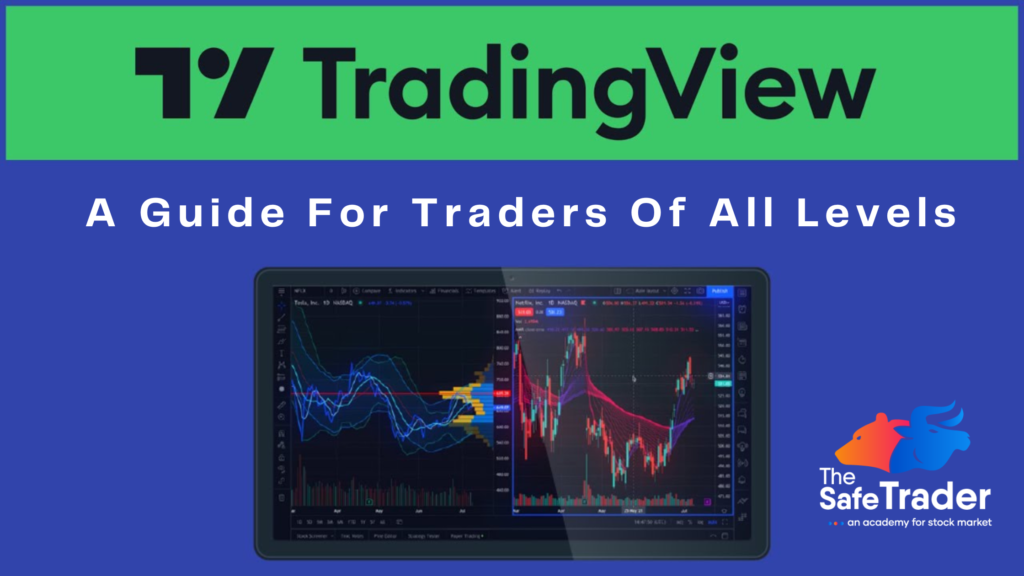
TradingView is a powerful platform for traders and investors, offering a wide range of chart types to analyze the markets. Choosing the right chart type is crucial as it affects how you interpret market movements and make trading decisions. In this article, we’ll explore the most popular chart types available on TradingView, their uses, and which chart might be best suited for entry-level traders and professionals. 1. Line Chart Overview: A Line Chart connects the closing prices of a stock or asset over a specific period, creating a simple line.Best for: Entry-Level Traders: Ideal for beginners as it provides a clean, clutter-free view of price trends. Analyzing long-term trends. Pros: Simple and easy to understand. Highlights the general direction of the market. Cons: Lacks detailed information like open, high, and low prices. 2. Bar Chart Overview: A Bar Chart displays price information using vertical bars for each time period, indicating the open, high, low, and close (OHLC) prices. Best for: Intermediate traders who want to understand market volatility. Visualizing price ranges and trends. Pros: Detailed representation of price movement. Useful for identifying trend reversals. Cons: May appear cluttered to beginners. 3. Candlestick Chart Overview: The Candlestick Chart is one of the most widely used chart types. It uses candles to show OHLC prices within a specific period, with the body of the candle representing the price range between the open and close. Best for: All Levels of Traders: Beginners to professionals can benefit from its clear representation of market sentiment. Analyzing market trends, patterns, and reversals. Pros: Easy to spot bullish and bearish trends. Rich visual representation of price action. Patterns like Doji, Hammer, and Engulfing provide actionable insights. Cons: Requires a learning curve to master candlestick patterns. 4. Heikin-Ashi Chart Overview: The Heikin-Ashi Chart smoothens price data to create a clearer view of trends, making it easier to identify trend direction without much noise. Best for: Professional traders looking for trend-following strategies. Swing and positional traders. Pros: Filters out market noise. Helps in identifying trends and reversals clearly. Cons: Does not show exact prices (open, high, low, close). 5. Renko Chart Overview: Renko Charts focus on price movement rather than time, with “bricks” appearing when the price moves a certain amount. Best for: Professional traders focused on reducing noise and tracking trends. Identifying support and resistance levels. Pros: Eliminates market noise. Clear trend signals. Cons: Ignores time, which might be important for certain trading strategies. 6. Point & Figure Chart Overview: Point & Figure Charts focus solely on price movement and ignore time and volume. They use “X” and “O” to represent upward and downward movements. Best for: Traders analyzing long-term price trends and breakout points. Pros: Excellent for identifying breakout levels. Reduces market noise. Cons: Not ideal for short-term trading. 7. Area Chart Overview: Similar to the Line Chart but with a shaded area beneath the line to emphasize the trend. Best for: Entry-level traders who prefer a visual representation of trends. Long-term investors. Pros: Simple and visually appealing. Highlights trends over time. Cons: Lacks detailed information. Which Chart Type is Most Useful? For Entry-Level Traders: Line Charts or Area Charts are the simplest to start with as they emphasize trends without overwhelming detail. Once comfortable, beginners can transition to Candlestick Charts for more in-depth analysis. For Professional Traders: Heikin-Ashi, Renko, and Point & Figure Charts are preferred for their ability to filter noise and highlight clear trends. Professional traders also use Candlestick Charts extensively for precision trading. For Intraday Traders: Candlestick Charts and Heikin-Ashi Charts are popular for intraday trading as they help identify short-term price movements and trends. For Swing/Positional Traders: Renko and Heikin-Ashi Charts are effective in identifying longer-term trends and reducing market noise. Which Chart Type is Most Accurate? Accuracy depends on your trading strategy. Candlestick Charts are considered reliable for most trading styles due to their detailed price representation. However, Renko and Heikin-Ashi Charts are more accurate for trend-following strategies as they filter out noise. Which Chart Type Can You Trust? All chart types are trustworthy if you use them correctly. The choice depends on your trading goals: Use Candlestick Charts for detailed analysis and pattern recognition. Use Heikin-Ashi Charts or Renko Charts for smooth trend visualization. Beginners should start with Line Charts to build confidence. Conclusion TradingView offers a variety of chart types to cater to different trading styles and skill levels. Beginners can start with Line or Candlestick Charts, while professionals can explore advanced options like Heikin-Ashi and Renko Charts. Remember, no chart is inherently better than another—it’s about aligning the chart type with your trading strategy and goals. Happy trading!
Discontinuation of Weekly Derivatives Contracts on Bank Nifty, Midcap Nifty, and FinNifty: A New Chapter in Indian Markets

Discontinuation of Weekly Derivatives Contracts on Bank Nifty, Midcap Nifty, and FinNifty: A New Chapter in Indian Markets The Securities and Exchange Board of India (SEBI) has made a groundbreaking decision to discontinue weekly derivatives contracts for Bank Nifty, Midcap Nifty, and Finnifty indices, effective November 20, 2024. This move, aimed at protecting small traders from excessive losses, marks a significant shift in the trading landscape. The Indian financial markets are witnessing a paradigm shift as the SEBI introduces significant reforms to the derivatives trading segment. Let’s dive into the details. Why SEBI Took This Bold Step The SEBI’s decision stems from a stark reality: while derivatives trading has boomed in recent years, retail traders have borne the brunt of substantial losses. According to SEBI’s study, only 7.2% of individual traders profited in derivatives trading over the past three years, while the remaining 92.8% collectively lost a staggering ₹1.81 lakh crore between FY22 and FY24. This concerning trend prompted SEBI to introduce stricter regulations to: The Rise and Fall of Weekly Expiry Contracts Since their launch by the National Stock Exchange (NSE) in 2016, weekly expiry contracts—especially Bank Nifty—have been a cornerstone of India’s derivatives market. Retail traders were drawn to these contracts for their affordability, high liquidity, and potential for quick returns. By the first half of FY25, Bank Nifty alone accounted for nearly 47.5% of NSE’s weekly options premium turnover, reflecting its dominance. Key Highlights of the New Rules 4. Focus on Monthly Expiry Contracts With weekly options discontinued for popular indices, traders are expected to pivot towards monthly contracts, which are generally less volatile and provide a more stable trading environment. Impact on the Market Immediate Effects Impact on Traders and Brokers Long-Term Implications While the immediate reaction to these changes may involve reduced liquidity and trading volumes, experts believe the long-term outcomes could be positive: Farewell to Bank Nifty Weekly Options The Bank Nifty weekly contract has been a favorite among traders since its launch in 2016, driving significant growth in the derivatives market. Its discontinuation marks the end of an era, but also a new beginning for India’s financial markets. As SEBI pushes for a more structured and risk-conscious trading environment, the focus shifts from short-term gains to sustainable investment practices.Bank Nifty weekly options have been the cornerstone of NSE’s derivatives segment, celebrated for their liquidity and affordability. Over the years, they have attracted millions of retail traders, becoming synonymous with high-frequency trading. However, their high-risk nature led to outsized losses for retail participants, making them a focal point of SEBI’s reforms. The Bigger Picture: From Speculation to Wealth Creation SEBI’s regulatory changes signify a paradigm shift toward investor protection and long-term wealth creation. By steering traders away from speculative trading, the market watchdog aims to foster a culture of disciplined investment. Potential Benefits What’s Next for Traders? For active traders, the discontinuation of weekly expiry contracts represents both a challenge and an opportunity. Here’s what they can do: A New Chapter for the Indian Market The discontinuation of weekly derivatives contracts for Bank Nifty, Midcap Nifty, and Finnifty signals the end of an era. While it may initially disrupt trading strategies and volumes, SEBI’s proactive measures prioritize investor protection and long-term market health. As the market adapts to these changes, traders and brokers alike will need to rethink their approaches, paving the way for a more resilient and inclusive financial ecosystem. Conclusion The discontinuation of weekly derivatives contracts on Bank Nifty, Midcap Nifty, and FinNifty marks the end of an era and the beginning of a more regulated, investor-friendly market. While the short-term impact may be disruptive, SEBI’s measures aim to build a robust financial ecosystem that balances growth with risk management. As traders and investors navigate these changes, adaptability and a focus on long-term goals will be key to success in the new market landscape. Stay tuned as we explore the evolving landscape of India’s derivatives market in the coming months!